

Nationwide Code Compliance Support
Pennsylvania Elevator Code 2026
Regulations & Standards
Switch to Cellular Phone Lines and Save 30% or More!
Find the latest information on Pennsylvania Elevator Code, laws, and safety standards. Our directories are updated monthly and include website links to help you quickly find the elevator codes and regulations for the state of Pennsylvania (PA)
Pennsylvania elevator codes impose a responsibility on building owners and property managers to adhere to specific requirements within elevators, ensuring the safety of all occupants. Failure to comply with these codes can result in penalties and potential legal action. While the particulars of the Pennsylvania elevator code may differ at the state and local levels, three primary codes govern elevator safety: the American Society of Mechanical Engineers (ASME), the International Building Code (IBC), and the Americans with Disabilities Act (ADA).
ADA
The Americans with Disabilities Act (ADA) mandates unrestricted and equal access to services for individuals with disabilities.
IBC
The International Building Code (IBC) establishes precautions against hazards associated with constructed environments.
ASME
The American Society of Mechanical Engineers (ASME) plays a pivotal role in the development of codes and standards.
The State of Pennsylvania (PA) currently operates under the 2000 ASME A17.1 with A17.1a-2002 addenda, IBC 2018
Pennsylvania Elevator Code Authority
Occupational and Industrial Safety
The Bureau of Occupational and Industrial Safety (BOIS) administers and enforces safety standards related to asbestos occupations, boilers, building construction (Uniform Construction Code), elevators (uniform Construction Code), flammable and combustible liquid, lead occupations and liquefied petroleum gas. Clicking on the photo icons in the center of this page will take you to pages where you can find compliance information for each of these major safety programs administered by BOIS.

Pennsylvania Elevator Code Authority
The Department of Labor & Industry (L&I) has partnered with ePlanSoft to provide site hosting that will allow the digital submissions of building plans for L&I customers. Meaning persons who must make an application to L&I for building approvals or to otherwise comply with the UCC, may use this service. Previously, these plans would require three sets of drawings to be mailed to the L&I building in Harrisburg.
Utilizing the new goPost digital plan review system, design professionals are now able to upload plans online for review by L&I’s certified plan examiners. Under the new system, only one digital plan is needed. Any form that was previously needed for plan review is still required. Any fee associated with a project is still required and will need to be mailed until the online payment system is implemented. Applicants can provide a scan of the check and upload it along with the submitted plans. The check will then need to be mailed to the building.
Please note that a delay may occur while the Department awaits payment. Until online payment processing is integrated, we recommend that any expedited submission follow the paper application process until that enhancement is in place
Elevator Cellular Phone Lines
How to eliminate the cost of traditional elevator phone lines and save 35% or more. Our cellular elevator phone lines conform to ASME, ADA, and IBC codes, encompassing all requirements of the Pennsylvania elevator code.

Pennsylvania also follows IBC 2018, which includes additional requirements for new elevator installations
If your elevator travels over 60 feet. A two-way communication system will be installed in the elevator that provides both visible text and audible modes per code requirements. If you’re modernizing the elevator it’s advisable to consult your local Pennsylvania elevator code authority for guidance on the applicable regulations.
- Two-way message display in the elevator cab for hearing and/or speech impaired
A method for authorized personnel to access video footage of passengers from any location within the cabin - A mechanism triggered by emergency personnel to modify the cabin message, signaling that assistance has arrived on-site
Please be advised that we are committed to consistently delivering accurate and current adoption information. We diligently update our records as new Pennsylvania elevator code information becomes available.
Pennsylvania Elevator Code – Elevator Phone Requirements ASME A17.1
- Two-way communication between elevator and authorized personnel
- On-site communications if over 60 ft of travel
- Communication between the elevator if elevator has remote machine room
- Answer by live authorized personnel – no automated answering
- Communication capability for onsite emergency personnel
- On-site monitoring if staffed 24/7 by authorized personnel
- Location identification on demand to authorized personnel
- Location identification without voice communication
- Hands-free devices only and telephone handsets are not allowed
- Phone automatlly answers when calling into elevator
- Automatic redirect if no answer onsite
- Monitoring the status of local telephone lines and issuing local alerts
Code Compliance Guidelines
What this page covers
If you manage elevators in Pennsylvania, the Pennsylvania Elevator Code impacts permits, inspections, and life safety communication readiness so you can keep equipment legal to operate and ready for every inspection cycle.
Who has jurisdiction statewide
The Pennsylvania Elevator Code is enforced through the state’s Uniform Construction Code framework, and elevator work is handled through state level oversight even when buildings are located in different counties or municipalities.
Which standard edition you are working under
The Pennsylvania Elevator Code is tied to a specific adopted edition of the elevator safety standard, so contractors should confirm the applicable edition for the scope of work before drawings are submitted or parts are ordered.
New installations and alterations require approval
Under the Pennsylvania Elevator Code, new installs plus most repairs, replacements, and alterations generally require a permit path, so plan ahead before equipment is changed, relocated, or materially modified.
Plan review is part of modernization planning
The Pennsylvania Elevator Code expects submitted plans and supporting documents for modernization and alteration work, so clear drawings, equipment details, and job scope descriptions reduce back and forth and shorten the approval cycle.
Permits protect owners and contractors
When Pennsylvania Elevator Code permits are in place, you have an auditable record of what was approved, what was installed, and what was inspected, which lowers risk when ownership changes or a claim is made later.
Acceptance inspections before returning to service
The Pennsylvania Elevator Code includes acceptance style inspections for new or altered equipment, so coordinate the elevator contractor, the inspector, and building access early to avoid schedule slips and downtime.
Periodic inspections and recurring cycles
Most buildings deal with Pennsylvania Elevator Code periodic inspections on recurring intervals based on the type of device, and missed cycles can create operational headaches, tenant disruption, and enforcement pressure.
Certificates, postings, and documentation
The Pennsylvania Elevator Code environment rewards clean documentation because inspectors and AHJs often expect proof of inspection status, device identification, and clear records that show what was tested and when.
Third party inspections and who can perform them
In Pennsylvania Elevator Code practice, inspections may be performed by qualified inspectors or certified third party agencies, so verify credentials before booking and keep the inspector’s reports in an accessible file.
Contractor coordination and licensing realities
Because Pennsylvania Elevator Code outcomes depend on workmanship, owners should use reputable elevator contractors, confirm qualifications for the device type, and avoid shortcuts that can cause reinspection or failed tests.
Repairs vs alterations
The Pennsylvania Elevator Code compliance path can differ based on whether work is treated as a repair, replacement, or alteration, so define the scope in writing to avoid surprises during review or field inspection.
Variances, appeals, and extensions
If strict compliance is impractical, the Pennsylvania Elevator Code process may allow formal variance or appeal routes, but approvals should be obtained before proceeding so the building stays defensible during inspections.
Emergency communication expectations
The Pennsylvania Elevator Code places real weight on emergency communication reliability because trapped passenger events require fast, two way contact with authorized help, and communication failures are a common inspection risk.
On site response planning and call handling
With Pennsylvania Elevator Code compliance, it is not enough that a button exists, the call must route to people who can respond and dispatch help, and your building procedures should match how the equipment is programmed.
Modernization triggers beyond the machine room
In many Pennsylvania Elevator Code projects, upgrades in the cab can trigger related requirements such as signage, fixtures, and communication components, so treat modernization as a system review not a parts swap.
How MyLinkLine supports compliance
For owners managing Pennsylvania Elevator Code risk, MyLinkLine supports Pennsylvania Elevator Code readiness by replacing outdated landlines with cellular solutions, providing 24-7 emergency monitoring options, and helping you keep emergency phones dependable for inspection day and real emergencies. MyLinkLine also supports Pennsylvania Elevator Code outcomes with nationwide installation support, service management tools, and reliability-focused features like device check-ins and visibility that help you spot issues before a missed test or failed call becomes a violation.
Compliance recordkeeping checklist
Keep a single folder for permits, inspection reports, test results, corrective work receipts, and device IDs so an inspector or new property manager can verify status quickly without hunting through emails.
Building staff readiness for inspections
Train onsite staff on how to access machine rooms, unlock controller spaces if applicable, escort inspectors, and provide keys and contact lists so inspections start on time and do not get rescheduled due to access delays.
Emergency phone test call procedure
Set a recurring test schedule, document each successful call, and verify the call reaches the correct party with clear two way audio so you can prove the system works before inspection day and during real emergencies.
Modernization scope control
For upgrades, define exactly what will change, what will remain, and what documentation will be produced so you avoid scope creep that delays approvals, increases downtime, or triggers unexpected reinspection requirements.
How MyLinkLine reduces inspection day surprises
MyLinkLine helps by replacing unreliable legacy phone lines with cellular solutions, providing options for 24/7 emergency monitoring, and giving you a dependable communication path that supports successful test calls, faster troubleshooting, and better documentation.
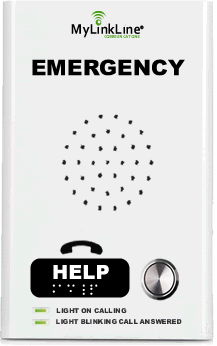
Emergency Elevator Phones
MyLinkLine will only install elevator telephones that meet code requirements. We also comply with ADA, ASME, ANSI and IBC codes in addition to all State and Local requirements if applicable. Volume pricing available.

Elevator Phone Monitoring Service
Our dispatch center has been delivering professional service for over twenty years. Our staff has extensive technical and interpersonal training to assist in emergency and non-emergency situations.

Lifetime Product Warranty
If any part of your elevator telephone(s) or elevator cellular landline fails at any time during your lifetime due to a defect in material or workmanship, we will repair or, at our option, replace the defective device at our cost***
Frequently Asked Questions
Elevator Code and Inspection Compliance
What does the Pennsylvania Elevator Code control for building owners
It generally affects how elevators are permitted, inspected, and maintained to ensure they comply with legal requirements, including the approval process for alterations and the maintenance of inspection records.
Who enforces elevator requirements in Pennsylvania
Elevator oversight is handled through state level administration tied to the Uniform Construction Code structure, with inspections completed by qualified inspectors and certified third-party agencies depending on the situation.
How often are elevators inspected under the Pennsylvania Elevator Code
Inspection frequency commonly depends on device type and classification, and owners should track dates and reports so the next inspection is scheduled before the cycle is missed.
Do I need a permit for modernization under the Pennsylvania Elevator Code
If the work changes safety-related components or qualifies as construction, alteration, replacement, or a similar scope, a permit and review path is commonly required before returning the equipment to service.
What should I keep on file to stay organized for inspections
For Pennsylvania Elevator Code readiness, keep permits, inspection reports, correction records, test documentation, and equipment identifiers together so you can respond quickly to inspector questions or renewal needs.
Can a third party inspector perform inspections under the Pennsylvania Elevator Code
Yes, depending on the inspection type and certification requirements, inspections can be performed by certified third-party agencies or qualified inspectors. Always confirm the current credentials before booking.
What happens if an elevator fails inspection
Typically, deficiencies must be corrected and documented, and a reinspection or follow-up confirmation may be required before the elevator is cleared, especially when issues impact life safety functions.
Are inspection certificates required by the Pennsylvania Elevator Code
Buildings commonly need to maintain proof of inspection status and display or retain required documentation, so treat certificates and reports as part of the building’s compliance record.
How do I reduce missed inspection risk with the Pennsylvania Elevator Code
Use a simple tracking system for due dates, assign an owner internally, keep vendor contacts current, and store the last report in one place so scheduling and follow-up are routine.
Does the Pennsylvania Elevator Code affect new installations differently than existing elevators
Yes, new installations and major alterations typically face more structured permitting and acceptance inspection steps, while existing equipment remains on a periodic inspection and maintenance cycle.
What is the difference between a repair and an alteration in the Pennsylvania Elevator Code context
A repair is usually restoring function, while an alteration changes the equipment or safety-related configuration, which more often drives plan review, permitting, and acceptance style inspection requirements.
Do municipalities have separate elevator codes in Pennsylvania
Local building departments can have roles in broader building enforcement, but elevator work is commonly handled under statewide requirements, and owners should confirm how local processes interact with state oversight.
What is a variance and when would I need one
A variance is a formal approval to deviate from strict requirements when equivalent safety can be demonstrated, and Pennsylvania Elevator Code variance requests should be obtained before work proceeds.
How should owners handle phased modernization under the Pennsylvania Elevator Code
Plan scope in phases that can be clearly permitted and inspected, maintain a clean record of what changed in each phase, and avoid leaving partial work that creates inspection confusion.
What records should an elevator contractor provide for the Pennsylvania Elevator Code file
Owners should request permit documents, as-built notes if changes occur, test and adjustment records, and written confirmation of corrections so the building has defensible proof of compliance.
Why do emergency phones cause compliance problems
Emergency phones fail when the line is unreliable, call routing is misconfigured, power backup is missing, or staff procedures do not match how calls are answered and dispatched.
What makes an emergency phone line reliable for inspections and real use
Reliability comes from consistent connectivity, proper programming, routine test calls, and fast response handling, plus visibility into service health so failures are found early, not during an inspection.
Does the Pennsylvania Elevator Code require a live response to emergency calls
Many jurisdictions and inspection practices expect calls to be answered by authorized personnel who can communicate and dispatch help, so avoid solutions that depend on unattended call paths.
How can property managers keep emergency phone compliance simple
Standardize the call answer procedure, test on a recurring schedule, document results, and use a solution that makes line status easy to monitor so problems are discovered before they become violations.
How can MyLinkLine help with emergency phone compliance under the Pennsylvania Elevator Code
MyLinkLine can replace legacy landlines with cellular service options for emergency phone lines, offer 24-7 emergency monitoring options, and provide installation and service support designed to keep emergency calling dependable for inspections and real emergencies.
Other Useful MyLinkLine Resources