
Nationwide Code Compliance Support
Delaware Elevator Code 2026
Regulations & Standards
Switch to Cellular Phone Lines and Save 30% or More!
Find the latest information on Delaware Elevator Code, laws, and safety standards. Our directories are updated monthly and include website links to help you quickly find the elevator codes and regulations for the state of Delaware (DE)
Delaware elevator codes impose a responsibility on building owners and property managers to adhere to specific requirements within elevators, ensuring the safety of all occupants. Failure to comply with these codes can result in penalties and potential legal action. While the particulars of the Delaware elevator code may differ at the state and local levels, three primary codes govern elevator safety: the American Society of Mechanical Engineers (ASME), the International Building Code (IBC), and the Americans with Disabilities Act (ADA).
ADA
The Americans with Disabilities Act (ADA) mandates unrestricted and equal access to services for individuals with disabilities.
IBC
The International Building Code (IBC) establishes precautions against hazards associated with constructed environments.
ASME
The American Society of Mechanical Engineers (ASME) plays a pivotal role in the development of codes and standards.
Delaware code varies by County or Municipal Rules
Delaware Elevator Code Authority (DE)
Authorities having jurisdiction are those government officials who are the final authority on questions in a particular area (or jurisdiction). In the State of Delaware the inspection requirements are dictated by counties and municipalities.
In Kent and Sussex counties do not require elevator certificates but all elevator owners who require a certification should contact an independent inspector who will inspect the unit and witness the annual safety or pressure test. It is also important to note that ASME A17.1a states that all elevators have the annual pressure or safety test, and, if applicable, the five-year full load test.
The Delaware Code Online
Elevator Cellular Phone Lines
How to eliminate the cost of traditional elevator phone lines and save 35% or more. Our cellular elevator phone lines conform to ASME, ADA, and IBC codes, encompassing all requirements of the Delaware elevator code.
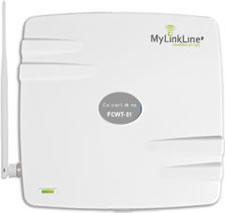
Delaware Elevator Code – Elevator Phone Requirements ASME A17.1 & IBC**
- Two-way communication between elevator and authorized personnel
- On-site communications if over 60 ft of travel
- Communication between the elevator if elevator has remote machine room
- Answer by live authorized personnel – no automated answering
- Communication capability for onsite emergency personnel
- On-site monitoring if staffed 24/7 by authorized personnel
- Location identification on demand to authorized personnel
- Location identification without voice communication
- Hands-free devices only and telephone handsets are not allowed
- Phone automatlly answers when calling into elevator
- Automatic redirect if no answer onsite
- Monitoring the status of local telephone lines and issuing local alerts
**Delaware also follows IBC 2021, which incorporates extra requirements for new elevators/construction projects
If your elevator travels over 60 feet. A two-way communication system will be installed in the elevator that provides both visible text and audible modes per code requirements. If you’re modernizing the elevator to ensure it complies with current codes, it’s advisable to consult your local Delaware elevator code authority for guidance on the applicable regulations.
- Two-way message display in the elevator cab for hearing and/or speech impaired
A method for authorized personnel to access video footage of passengers from any location within the cabin - A mechanism triggered by emergency personnel to modify the cabin message, signaling that assistance has arrived on-site
Please be advised that we are committed to consistently delivering accurate and current adoption information. We diligently update our records as new Delaware elevator code information becomes available.
Delaware elevator code is short at the state level, but it is still a big deal for compliance because it ties elevator emergency communication to your ability to legally operate. Delaware elevator code requires every passenger elevator to have a way for riders to communicate directly with a person outside the elevator during an emergency, and that connection must be available on a 24-hour basis. Private residences are exempt. Delaware elevator code also allows each county or municipality to adopt rules to put that requirement into practice, which is why local processes matter as much as the state statute.
Delaware elevator code includes a clear compliance stick. If an elevator does not meet the emergency communication requirement, a certificate of occupancy should not be issued for a non-exempt building that contains that elevator, and a permit or license to operate the elevator should not be issued or renewed. Delaware elevator code also sets a penalty framework that can add up over time, with fines tied to each year of noncompliance. For owners and property managers, this is why “the phone works” is not a nice-to-have. It is an operational requirement that can affect occupancy, renewals, and inspection outcomes.
Because Delaware elevator code gives counties and municipalities authority to create their own enforcement rules, inspection and permitting workflows can differ depending on where the property sits. New Castle County publishes detailed guidance that places responsibility on the owner to ensure required inspections are completed on time and that the elevator meets safety requirements. In that county, licensed elevator mechanics handle maintenance and required annual testing, and a Qualified Elevator Inspector performs periodic inspections on a set schedule, with records submitted to the local authority. For multi-site portfolios, the practical takeaway is simple. Confirm the rules by jurisdiction and keep your compliance documentation centralized.
Permits, certificates, and renewals are where teams lose time when they are juggling elevator contractors, telecom providers, and internal staff. In New Castle County, the local department issues Elevator Certificates of Compliance and Operation annually after renewal fees are paid and required inspections are verified, and renewal statements are issued on a predictable seasonal cycle. Delaware elevator code compliance is easier when you treat the emergency phone line, test results, and paperwork as one package. The Delaware elevator code is not forgiving when a line quietly fails, and no one notices until the inspector pushes the button.
Modernization and major repairs are also the moment when emergency communication requirements get rechecked. If you are upgrading controllers, adding in-car fixtures, changing the cab operating panel, or doing a door package, assume the AHJ will expect the emergency communication device to be operable, correctly labeled, and reliably answered. Delaware elevator code itself focuses on the emergency communication obligation, but local rules and the code editions used by your jurisdiction often shape how the system is evaluated during inspections. Plan the phone line and answering plan early so your modernization schedule does not get stuck waiting on telecom.
MyLinkLine helps make Delaware elevator code compliance simpler by focusing on the part that causes the most inspection failures: the emergency communication path. We help replace unreliable copper landlines with dedicated cellular elevator phone lines and support programming so calls route to a live answering point that makes sense for your building, whether that is your preferred service or our monitoring. We also help teams set up repeatable testing and documentation routines, so your records are ready when inspectors ask. If you manage multiple buildings, we can quickly review your portfolio and highlight which elevators are most exposed to Delaware elevator code risk due to outdated lines, unclear routing, or missing test documentation.
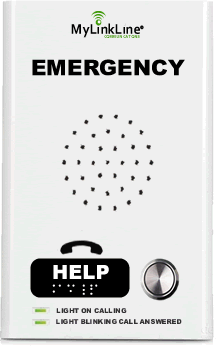
Emergency Elevator Phones
MyLinkLine will only install elevator telephones that meet code requirements. We also comply with ADA, ASME, ANSI and IBC codes in addition to all State and Local requirements if applicable. Volume pricing available.

Elevator Phone Monitoring Service
Our dispatch center has been delivering professional service for over twenty years. Our staff has extensive technical and interpersonal training to assist in emergency and non-emergency situations.

Lifetime Product Warranty
If any part of your elevator telephone(s) or elevator cellular landline fails at any time during your lifetime due to a defect in material or workmanship, we will repair or, at our option, replace the defective device at our cost***
Frequently Asked Questions
Delaware Elevator Code and Inspection Compliance
Does Delaware require an elevator emergency phone?
Yes. Delaware elevator code requires a passenger elevator to have a way for riders to communicate directly with a person outside the elevator, available on a 24-hour basis. The goal is a reliable emergency connection that is answered by a real person.
Are private residences included?
No. Delaware elevator code specifically excludes private residences from the emergency communication requirement. For commercial and multifamily buildings, assume the requirement applies unless your local authority confirms an exemption.
Who enforces elevator rules in Delaware?
Delaware elevator code allows counties and municipalities to adopt rules to carry out the emergency communication requirement. That means enforcement and inspection procedures can be local, so always confirm requirements with the authority having jurisdiction where the property is located.
What happens if the elevator phone does not work during an inspection??
Delaware elevator code links compliance to the ability to obtain or renew permission to operate, and it also supports penalties for ongoing noncompliance. Practically, failed emergency communication can trigger a failed inspection outcome and delay approvals.
Do I need a permit or license to operate an elevator?
Delaware elevator code states that permission to operate should not be issued or renewed if the elevator does not comply with the emergency communication requirement. Your local jurisdiction will define the exact certificate, renewal, and documentation process.
How often should we test elevator emergency communications?
Delaware elevator code requires availability on a 24-hour basis, so testing should be frequent enough to prove the line stays operational between inspections. Many teams adopt a monthly routine and increase frequency for higher-risk buildings or critical sites.
Can I replace a landline with a cellular line and still comply?
Yes, as long as the solution supports reliable two-way communication and is answered appropriately. Delaware elevator code focuses on the outcome, not the carrier type, so the key is that the emergency call reaches a person outside the elevator every time.
What should we document for compliance?
For Delaware elevator code readiness, keep a clear record of the emergency phone number or answering plan, recent test results, and any corrective actions taken after failures. If your jurisdiction requires submissions, keep copies of what was filed and when.
How does MyLinkLine help with Delaware compliance?
MyLinkLine helps you meet Delaware elevator code expectations by stabilizing the emergency phone connection, simplifying call routing to a live answer, and supporting consistent testing and documentation. We can also help across multiple sites, so compliance is managed the same way everywhere.
Other Useful MyLinkLine Resources