
Imagine walking down a city street in 1900 and spotting a small iron box mounted on a lamp post or sidewalk. Inside was a telegraph mechanism or telephone line you could use to summon help, long before the age of 911 or cell phones. These were the ancestors of modern emergency call boxes, and their story is a fascinating glimpse into how public safety communications evolved.
Origins and Early Use
The roots of emergency call boxes stretch back to the mid-19th century. In 1852, Boston introduced one of the first public fire alarm telegraph systems. Citizens could pull a lever on a street box to send a coded electrical signal to a central fire station. That system was later commercialized by the Gamewell company, and by the late 1800s, many U.S. cities and towns installed fire alarm boxes at street corners.
Parallel to fire boxes, police call boxes emerged. In the UK, the iconic blue police boxes of the mid-20th century served as both public telephones and small outposts for officers on patrol. In the U.S., beat officers used call boxes to “check in” with precincts, and some boxes also allowed public calls to report crimes or emergencies.
These systems relied on telegraph pulses or direct telephone lines. For example, when a fire box lever was pulled, a wheel inside would rotate and tap out the box’s unique number in Morse-style pulses. Fire headquarters would interpret the code, match it to a map, and dispatch units. In Washington, D.C., these fire boxes stayed in use into the late 20th century; many were disabled only in the 1970s, and some have since been preserved or repurposed.
The Rise of Roadside Call Boxes
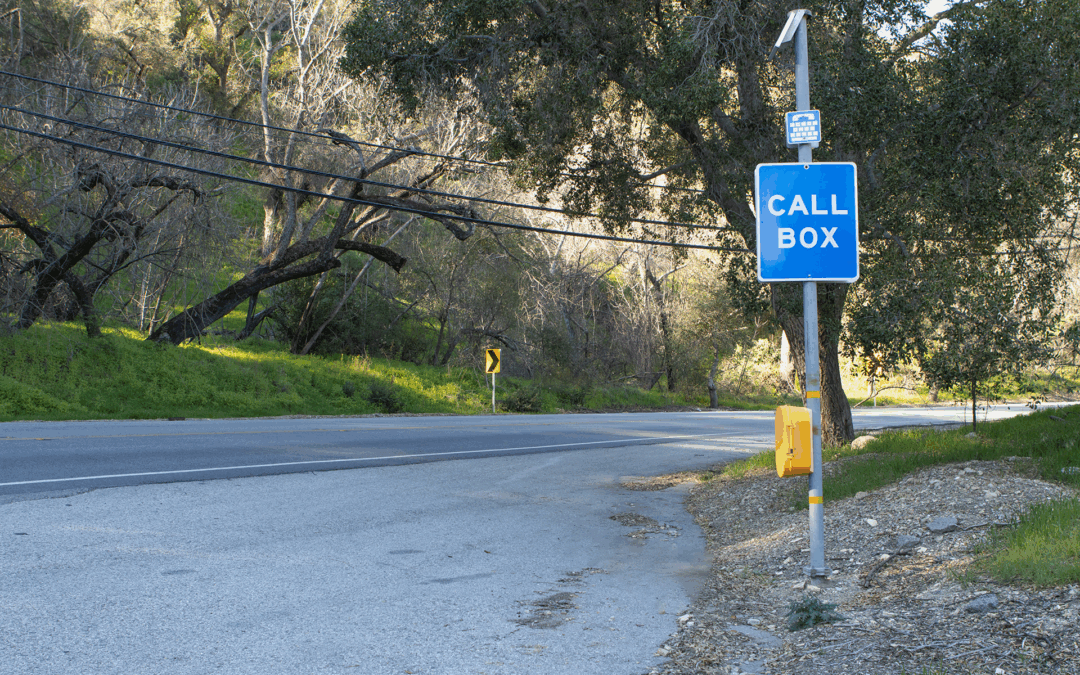
As automobile travel became widespread in the mid-20th century, a new class of call boxes appeared: the roadside emergency phone. In many U.S. states, highway call boxes were installed at intervals (often a quarter-mile or so) so that stranded motorists, in an era before widespread mobile phones, could summon assistance. Similar systems were adopted elsewhere around the world.
These emergency telephones connected directly to highway patrol or dispatch centers. They were often marked with identifiers so operators would know exactly which box was used, even if the caller could not give precise location information.

Why They’re Being Phased Out
Over time, several factors have made emergency call boxes less relevant:
Maintenance, infrastructure, and reliability challenges
Maintaining a network of boxes (power supply, phone lines, cellular connectivity, vandalism repair) grows costly.
Advances in technology and alternatives
Modern emergency systems rely on enhanced 911, GPS location, smartphone apps, vehicle telematics, and other remote communication methods that are more flexible and cost-effective.
Explosion of mobile phone adoption
As virtually everyone now carries a smartphone, the need to go to a fixed box to call for help has dramatically declined.
Falling usage and cost inefficiency
Many jurisdictions report steep declines in call box usage. In Ventura County, for example, call volume fell 85 % between 2005 and 2024 (from ~5,800 annual calls to ~849), prompting the county to decommission the system by September 2025. In San Bernardino County, call boxes are also being removed due to obsolescence.
Some municipalities are repurposing old call boxes. In Washington, D.C., for example, several historic boxes have been converted into public art installations through the “Art on Call” program. In other places, boxes have been adapted for housing defibrillators or community services.
Still, a few call boxes persist, particularly in remote or disaster-prone areas, where cell service may be unreliable. In such scenarios, an independent, hardwired call box can offer redundancy that wireless systems alone can’t assure.
Prepare for the Future
Emergency call boxes have played a vital role across more than a century. They’ve helped citizens in emergencies by enabling first responders to maintain contact. Essentially, they served as a backbone of public safety. But the widespread adoption of mobile communications, cost pressures, and innovations in emergency response are gradually rendering them obsolete. As jurisdictions retire these boxes, you need to make sure you have the proper emergency communication systems in place. For expert assistance in setting up two-way emergency communication systems, contact MyLinkLine today. Let’s work together to ensure the safety of everyone.