
Elevator emergency communication systems are a critical—but often overlooked—component of building safety and compliance. For property managers, understanding elevator phone line requirements and staying aligned with codes like ASME A17.1 and the International Building Code (IBC) is essential to protecting tenants, avoiding violations, and ensuring rapid emergency response.
Key Points
- Elevator phone line requirements are critical for safety and compliance. They ensure trapped passengers can quickly connect with help.
- ASME A17.1 mandates two-way, hands-free communication, visual/audible indicators, backup power, and accessibility features.
- A compliant system must connect to live personnel, work during outages, and clearly identify the elevator’s location.
- Regular testing (at least monthly) is essential to confirm system functionality and avoid violations.
- 24/7 monitoring services ensure emergency calls are always answered, even in unstaffed buildings.
- Modern features like video and text communication enhance accessibility and align with newer code updates.
- Maintaining documentation and inspection records helps streamline audits and prove compliance.
Why Are Elevator Emergency Communication Systems Critical for Tenant Safety?
Elevators are used billions of times each year. When malfunctions occur, passengers can become trapped with no immediate way to call for help. Emergency communication systems bridge that gap by providing direct, real-time access to assistance.
Modern standards require that elevators include two-way communication systems connecting passengers to trained personnel who can coordinate a response.
These systems are critical because they:
- Provide immediate reassurance to trapped occupants
- Enable faster emergency response times
- Support vulnerable populations, including elderly and disabled tenants
- Reduce liability for property owners and managers
Recent updates to ASME codes also emphasize accessibility and inclusivity. They require communication methods that work for individuals who are deaf, hard of hearing, or speech-impaired.
In short, elevator communication systems are not just a compliance checkbox. They are a life-safety system.
What Are the ASME A17.1 Requirements for Elevator Phones?
The ASME A17.1 Safety Code for Elevators and Escalators establishes the baseline for elevator phone line requirements in the U.S. One of the most important sections is 2.27.1.1, which outlines emergency communication standards.
Key requirements include:
1. Two-Way Communication
Elevators must have a two-way communication system between the car and a location staffed by authorized personnel.
2. Continuous Monitoring or Backup Routing
If the primary communication point is unavailable, the system must automatically route calls to another staffed location within a set timeframe.
3. Accessibility Compliance
Controls, labeling, and functionality must align with ADA standards, ensuring usability for all occupants.
4. Hands-Free Operation
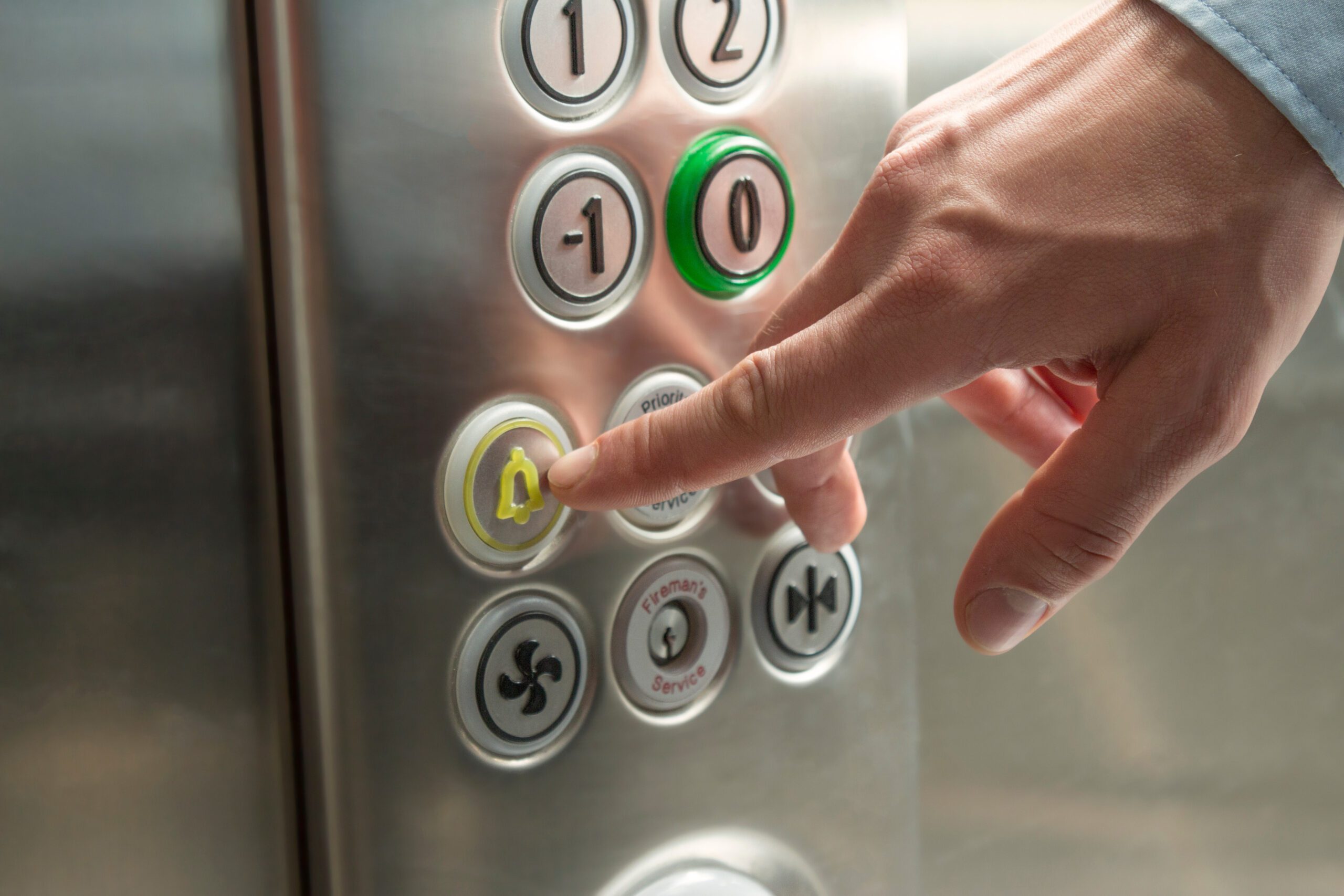
Systems must be hands-free and easily activated, typically via a clearly labeled “HELP” button.
5. Emergency Power Backup
Communication systems must remain operational during power outages, often requiring hours of backup functionality.
6. Visual and Audible Indicators
A visual signal must confirm that help has been contacted, ensuring passengers know their call was received.
7. Advanced Communication (Newer Codes)
Updated versions of ASME A17.1 now include:
- Text-based communication capabilities
- Video monitoring for enhanced emergency response
- Real-time status messaging inside the elevator
What Qualifies as a Compliant Two-Way Elevator Communication System?
A compliant system goes beyond a basic phone line. Today’s elevator phone line requirements are performance-based. That means the focus is on functionality rather than the specific technology used.
A compliant system must:
- Enable live, two-way communication with emergency personnel
- Be available whenever the elevator is in operation
- Provide clear identification of the elevator location to responders
- Offer accessible communication options (voice and/or text)
- Maintain reliability during power outages
- Avoid automated answering systems—calls must reach real personnel
Importantly, traditional landlines are no longer the only option. Cellular and VoIP-based systems can meet code requirements if they deliver the same level of reliability and performance.
Best Practices for Maintaining Elevator Communication Systems
Staying compliant requires more than installation—it demands ongoing attention. Here are key best practices for property managers:
1. Implement Routine Testing Schedules
Test elevator phones at least monthly to ensure:
- Calls connect successfully
- Audio quality is clear
- Visual indicators function properly
Routine testing helps identify issues before they become compliance violations.
2. Use 24/7 Monitoring Services
If your building is not staffed around the clock, ensure your system connects to a third-party monitoring service that can respond immediately to emergency calls.
3. Upgrade to Cellular Technology
Many property managers are replacing outdated landlines with cellular-based systems, which offer:
- Greater reliability
- Lower long-term costs
- Easier scalability
Cellular solutions can fully meet elevator phone line requirements when properly installed and monitored.
4. Incorporate Video and Text Capabilities
Newer ASME standards emphasize multimodal communication, including video and text. These features:
- Improve accessibility
- Enhance situational awareness for responders
- Future-proof your building against evolving code requirements
5. Ensure Backup Power Functionality
Verify that your system remains operational during outages. Backup power should support:
- Alarm signals
- Communication systems for several hours
6. Keep Documentation and Inspection Records
Maintain clear records of:
- Testing schedules
- Maintenance logs
- Inspection results
This documentation is essential during audits or inspections.
7. Partner with a Compliance-Focused Provider
Work with a provider that understands ASME A17.1 and IBC requirements and offers:
- Monitoring services
- Automatic system diagnostics
- Compliance reporting
Contact MyLinkLine Today
Elevator communication systems are a cornerstone of building safety and regulatory compliance. By understanding elevator phone line requirements and following best practices—from routine testing to adopting modern cellular and video technologies—property managers can ensure both tenant safety and code compliance.
Proactive management not only reduces risk but also enhances the overall reliability of your property, giving tenants confidence that help is always just a button away. Contact MyLinkLine to keep your elevator’s communication system up to date.